
Horn of Africa · 2 h · Meat · Main course · For confident cooks
Doro Wat
For 6 servings · US units
Chicken and eggs braised in a dark sauce of slow-cooked onions and berbere
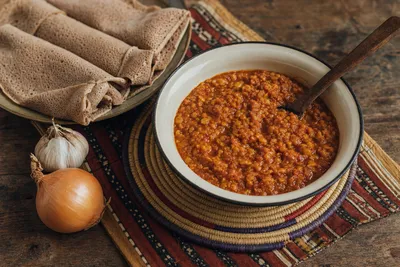
Doro Wat is an Ethiopian chicken stew whose depth comes from onions cooked down slowly in a dry pot until dark, from niter kibbeh, a spiced clarified butter, and from the chili spice blend berbere. It is served on injera, the teff flatbread eaten with stews in Ethiopia and Eritrea, and suits celebrations and a big table where everyone shares.
Ingredients
- 3⅓ lbchickenskinned, cut into pieces; thighs and drumsticks work well
- 5onionvery finely chopped or pureed, base of the sauce
- 5 clovesgarlicfinely minced or grated
- 1 tbspgingerfresh, finely grated
- 3 tbspEthiopian chili spice blend, adjust to heat preferenceAn Ethiopian and Eritrean spice blend of toasted dried chillies and warm spices, brick-red, hot and deeply aromatic.Substitute: You can blend it yourself from sweet paprika, cayenne, ground fenugreek, ginger, cardamom, coriander, cloves, cinnamon and black pepper; this comes fairly close, though the distinct note of korarima is missing. Plain chilli powder or ras el hanout are not substitutes, as they lack the fenugreek depth and the balance of heat and warmth.Read more
- 4 tbspspiced clarified butter; butter as substituteEthiopian spiced clarified butter: butter clarified with onion, garlic, ginger and spices. Nutty, deeply aromatic, faintly herbal.Substitute: Best made at home from butter. Ghee or clarified butter briefly heated with onion, garlic, ginger, fenugreek, cardamom and turmeric comes fairly close; without koseret and besobela the characteristic herbal note is missing, and a little dried oregano and basil only partly fills the gap. Plain ghee or oil gives a noticeably flatter dish.Read more
- 6eggshard-boiled, peeled, scored or pierced; one per person
- 1lemonjuiced, for marinating the chicken
- 2 tspsaltpartly for the marinade, partly for the sauce
- ½ tsppepperfreshly ground
- ½ tspground; traditionally Ethiopian korarimaGreen pods from a plant of the ginger family, holding small, intensely fragrant seeds that are warm, lemony and faintly camphor-like.Substitute: There is no true substitute; black cardamom is smoky and resinous and tastes different, and a mix of a little cinnamon and nutmeg gives warmth but not the fresh, lemony note.Read more
- 1 tbsptomato pasteor one small chopped tomato
- 1 cupwaterfor the sauce, more if needed
- 2 tbspoilin addition to the butter
Method
- Marinate the chickenSkin the chicken, cut it into pieces and score the meat several times. In Ethiopia the bird is traditionally cut into 21 pieces. Rub the pieces with lemon juice and a little of the salt and leave them to marinate for about 30 minutes.
- Prepare the eggsMeanwhile, hard-boil the eggs, peel them and score them all over or prick them with a fork so the sauce can soak in later.
- Dry-roast the onionsChop the red onions very finely or purée them. Cook them in a heavy pot with no fat over medium heat, stirring often, until they are dark and greatly reduced. This takes patience, and the onions must not burn.
- Add fat and aromaticsAdd the niter kibbeh and vegetable oil to the onions, then stir in the garlic and ginger and cook for a few minutes, stirring.
- Spice and simmer the sauceStir in the berbere, cardamom, black pepper, the rest of the salt and the tomato paste. Pour in the water and simmer the sauce until the fat separates and rises to the surface.
- Braise the chickenAdd the chicken pieces to the sauce and turn them to coat. Cover and braise over low heat for about 40 minutes, turning them now and then and adding a little more water if needed.
- Warm the eggs in the sauceLay the eggs in the sauce, spoon sauce over them and let them sit in it for 5 to 15 minutes.
- Taste and adjustTaste the Doro Wat and adjust with berbere, salt and lemon juice.
- Serve on injeraSpread the stew over injera, set the eggs on top and serve extra injera alongside.
Tips and variations
Chicken stock can stand in for the water, and some cooks braise the chicken in tej, Ethiopian honey wine, or use white wine with honey or a dry red wine instead. Fenugreek and nutmeg can round out the spices, and if you like, cook the eggs only until soft-boiled. If you can't find injera, bread or rice work too. Doro Wat is good reheated the next day, once the spices have settled in, and a spoonful of yogurt or cream cheese on the side softens the heat.
Allergens
Contains: Eggs, Milk (including lactose)
Not every ingredient in this recipe has been checked, so nothing is promised as free from.
These notes follow from this recipe's ingredient list. Ready-made products and brands may contain further allergens — please check the packaging yourself.
Something not right?
This recipe was put together from independent sources and checked before publishing. Even so, a mistake can slip through — an amount that does not add up, a step that does not work as written. If you spot something, write to us: we will look into it and put it right.