
West Africa · 2 h · Fish · Main course · For confident cooks
Thieboudienne
For 6 servings · US units
Senegalese rice with rof-stuffed fish, vegetables and the prized xoon crust
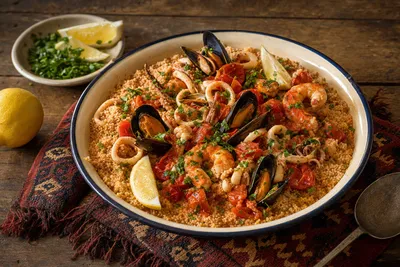
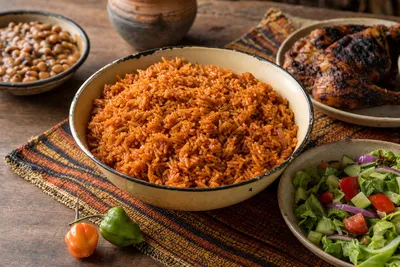
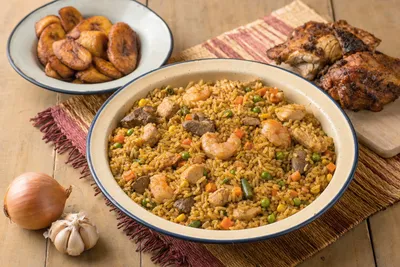
Thieboudienne, also known as ceebu jen or poisson au riz, is regarded as a Senegalese dish of fish and rice: thick fish steaks are stuffed with a green herb paste called rof, and broken rice cooks in the tomato broth that has already taken up the flavour of the fish and vegetables. Everything comes to the table together on one large platter in the middle, shared by everyone, with bissap (hibiscus) or kinkeliba tea to drink.
Ingredients
- 2½ lbWhite fishfirm-fleshed, e.g. grouper or snapper, cut into thick bone-in steaks
- 1 bunchparsleyflat-leaf, for the green stuffing paste (rof)
- 6 clovesgarlicpartly for the paste, partly for the sauce
- 4Spring onionsfor the paste
- 2or habanero; for the paste or cooked whole with the riceCaution: The heat clings to the hands and burns eyes and mucous membranes, so wear gloves when cutting and add it sparingly.A small, squat, very hot chili with a fruity aroma, a close relative of the habanero.Substitute: Habanero comes closest in heat and fruitiness; milder chilies such as jalapeño bring neither the heat nor the aroma and leave the dish flat.Read more
- ½ cupoilor neutral oil; for frying and the sauce
- 2onionchopped or sliced
- 4¼ oztomato pastefried until darkened
- 2tomatoesfresh, chopped
- 3carrotshalved or in large pieces
- 1cabbagehead, cut into wedges
- 10½ ozpeeled, in chunksCaution: Raw cassava contains compounds that release cyanide, so it must never be eaten raw but always peeled, thoroughly cooked and the cooking water discarded.A starchy root with brown, bark-like skin and firm white flesh that tastes mild and faintly nutty once cooked.Substitute: Frozen peeled cassava stands in for fresh almost perfectly and keeps far longer. For boiled or fried pieces, waxy potatoes will do at a pinch, though they are softer, less fibrous and less starchy; sweet potatoes come out noticeably sweeter. For pounded doughs such as fufu, potatoes are no real substitute because they lack the stretchy elasticity; ready-made cassava flour or fufu powder is the better choice there.Read more
- 1sweet potatoesin large chunks
- 1eggplantquartered or halved
- 5¼ ozwhole, cooked briefly at the endA green, ridged pod full of small seeds that releases a slippery juice as it cooks, which thickens soups and stews.Substitute: There is no true substitute, because no other vegetable provides the same slippery, thickening texture. Green beans give a similar bite, but the dish will stay thinner.Read more
- 2potatoespeeled, in chunks
- 1⅛ lbrinsedRice grains that broke during milling, usually from fragrant long-grain rice; you can find it in Asian or African grocery shops.Substitute: Jasmine rice pulsed briefly in a blender until most grains are broken comes close; whole grains work too but stay looser and absorb less sauce.Read more
- 5⅛ cupswaterfor the broth
- 2 tspsaltfor paste and broth
- pepperground, to taste
- 1Stock cubepartly in the paste, partly in the broth
- 1 tbspalso as dawadawa powder; into the sauce (optional)Fermented seeds of the West African néré tree, soft and dark, with a strong, pungent smell and a deep, savoury flavour.Substitute: There is no true substitute. A little light miso or fermented black beans give a similar savoury depth, but not the distinctive, slightly funky fermented character of iru; the dish will taste smoother and less distinctly West African.Read more
- 1 tbspinto the sauce (optional)Fermented, dried meat of a large West African sea snail, used in small pieces as a powerful seasoning.Substitute: There is no equivalent substitute. Guedj, the West African fermented dried fish, comes closest; failing that, a little fish sauce or dried shrimp adds salt and depth, but the dish loses the snail's distinctive funky fermented character.Read more
- 1briefly soaked, into the broth (optional)Fish, whole or in pieces, smoked and dried over a wood fire, usually catfish, mackerel or bonga. Hard, dry and intensely smoky, used more as a seasoning than as a main ingredient.Substitute: Hot-smoked mackerel from the chiller cabinet comes closest, but it is milder and softer; use more of it and add it towards the end so it does not fall apart completely. A little dried shrimp or ground crayfish can partly make up the missing depth, but neither substitute fully matches the pronounced wood smoke.Read more
- 3bay leavesinto the sauce (optional)
- 1lemonfor rubbing the fish or as wedges to serve (optional)
- 1bell pepperred or green, in the sauce or as a vegetable (optional)
Method
- Make the rofFor the rof, pound or blend the parsley, some of the garlic, the spring onions, one Scotch bonnet, a little salt and, if you like, part of the stock cube into a coarse green paste in a mortar or blender. The second chili can stay whole and go in with the rice later.
- Stuff the fish with rofCut deep slits into the fish steaks, rub them with lemon if you like, press the rof firmly into the slits and let the fish sit for a little while.
- Sear fish, soften onionsHeat the peanut oil in a large, heavy pot, sear the fish steaks briefly on both sides and lift them out again. In the same oil, cook the onions with the rest of the garlic until soft.
- Fry the tomato baseAdd the tomato paste and chopped tomatoes, plus the bell pepper if using, and fry, stirring, until the mixture turns noticeably darker and the oil separates. If you are using them, stir in the netetou, yet and bay leaves now.
- Bring the broth to a boilPour in the water, add the salt, the rest of the stock cube, black pepper and, if you like, the briefly soaked smoked dried fish, then bring everything to a boil.
- Cook the vegetables in stagesAdd the vegetables according to how long they take to cook: cassava, sweet potato, carrots and potatoes first, then the cabbage and eggplant, and the okra right at the end for just a short time. Let everything simmer until tender, then lift it out and keep it warm, covered.
- Poach the fishLay the fish in the broth and let it poach until cooked through, then lift it out carefully and keep it warm as well.
- Cook the rice in the brothCheck the amount of broth: it should be roughly twice the volume of the rice, or stand about 2 cm above it; ladle some off or add water as needed, and season it well. Remove the bay leaves. Stir in the rinsed broken rice, lay the second Scotch bonnet whole on top of the rice, cover and cook over the lowest heat for 15 to 25 minutes, until the liquid has been absorbed.
- Plate up and serveTake the pot off the heat and let it rest briefly. Lift out the whole chili before serving, or set it aside to use as a garnish. Heap the rice onto a large platter, arrange the fish and vegetables on top, add the chili if you like, then loosen the crust from the bottom of the pot, the xoon, and add it to the platter; serve for everyone to share.
Tips and variations
Fish fillets can stand in for the steaks; in that case the rice is often cooked separately and only briefly folded into the vegetable and tomato sauce. Some cooks use canned tomato sauce instead of fresh tomatoes, sweat the rice in oil first and finish it by steaming or in the oven. Others add ginger, dill and lemon zest to the marinade and season the sauce with a pepper and tomato purée, cumin and coriander, use vegetable stock instead of water and finish the fish on top of the rice, or cook the fish straight in the tomato sauce without searing it. Swede or pumpkin also work among the vegetables, while a simpler version sears the fish without poaching it and keeps to just carrots and cabbage. Serve with lemon wedges or a tamarind sauce on the side, and bissap or kinkeliba tea to drink.
Allergens
Contains: Fish
May contain if you use the optional ingredients: Cereals containing gluten, Molluscs
Not every ingredient in this recipe has been checked, so nothing is promised as free from.
These notes follow from this recipe's ingredient list. Ready-made products and brands may contain further allergens — please check the packaging yourself.
Something not right?
This recipe was put together from independent sources and checked before publishing. Even so, a mistake can slip through — an amount that does not add up, a step that does not work as written. If you spot something, write to us: we will look into it and put it right.